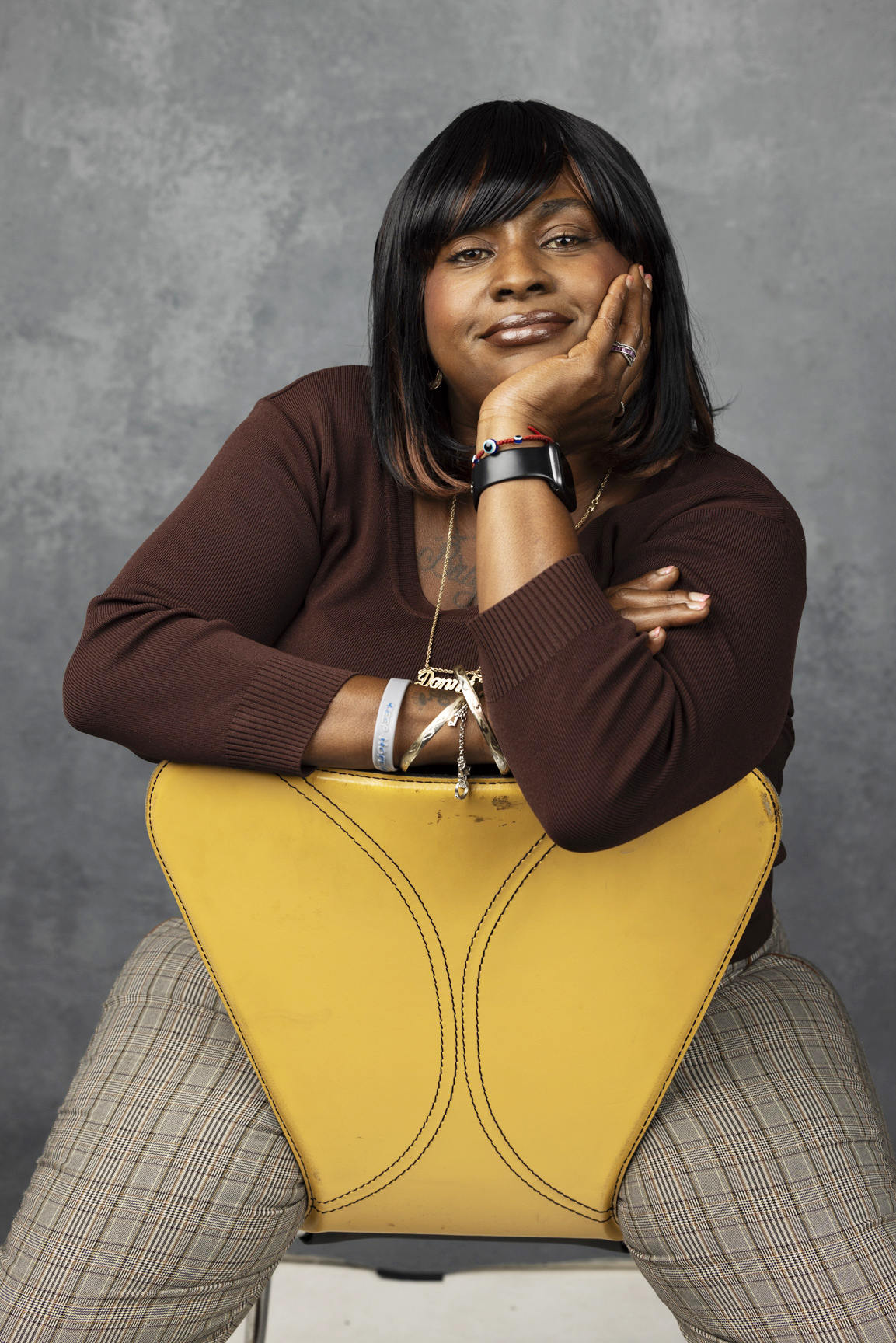
 To relax after a day of work, Donna Palmer and her boyfriend would frequent a local bar where they would wind down and have a good time with friends.
On Sept. 1, 2024, Palmer wasn’t enjoying herself and asked her boyfriend to take her home. Once they got in the car and started driving, an argument ensued. She told her boyfriend she wanted to end the relationship, and as a result he became angry and began speeding.
“I noticed the cars around me were going pretty fast, so I looked at the speedometer and noticed it was between 80 and 85 miles per hour,” Palmer says. “I asked him to slow down but he refused. When I noticed we were at 90 miles per hour I grabbed my phone to call the police. Then he grabbed the phone out of my hand and threw it on the floor. While I was on the floor to get the phone I felt the car shift quickly. As I was trying to lift my head and my body up, I see trees and then hear a loud a boom.”
Palmer was rushed to Harris Health Ben Taub Hospital with critical life-threatening injuries. In fact, her doctors thought she only had a 40% chance of surviving.
“They had to use the jaws of life to get me out of the car. A piece of metal guardrail from the highway went through the windshield,” she says. “Thank God I was in the position I was in, because the doctors said if it would have hit my head, it would have killed me.”
Palmer broke both eye sockets, her spinal cord, breastbone and all her ribs. She also suffered numerous scratches and cuts to her face, cracked two teeth and punctured her lungs.
“I couldn’t breathe on my own for a while and constantly woke up in pain,” she recalls. “Because of my head laceration and scalp being open, I developed an infection that according to doctors was most likely due to the dirty debris from the trees and everything.”
Palmer says recovery is a struggle, but her Ben Taub Hospital medical team and simply knowing she lived, helps her get through it.
“I had some really good doctors,” she says. “Neurology was very sweet. They would tell me everything about the process when my head was healing and described what they were doing every step of the way. The wound care team was great as well.”
Due to the extent of Palmer’s physical injuries, her confidence declined.
“I hide my scars because I don’t look the same, but my son is my biggest supporter,” she says. “He tells me, ‘Mom why do you want to hide your scars? They show where you
came from and that you’re still here. That you’re a warrior.’ So that definitely helps with my confidence.”
Palmer is grateful to be walking thanks to her therapy and family’s motivation.
“Physical therapy is what really got me going,” she says. “The physical therapist would say, ‘If you don’t move it, you’ll lose it.’ And that stuck with me. I wanted to move. I didn’t want to be stuck in bed. I was a main provider for my family, so they depend on me. I have to get better and stronger for them.”